HCOMP 2026 / CI 2026 · Workshops Day

Cognitive Security for Human–AI Systems

A full-day workshop on protecting the conditions under which people and groups reason for themselves as generative and agentic AI reshape attention, belief, memory, judgment, and agency.

DateSeptember 27, 2026
WhereRoom 4100, Virginia Tech Academic Building One, 3625 Potomac Ave, Alexandria, VA · in person + hybrid
Time9:00–17:00 ET · badges from 8:00
Program1 keynote · 2 panels · 17 lightning talks · the CVMC Jam
The Workshop

Overview

As generative and agentic AI become embedded in search, education, companionship, and decision support, a class of risk emerges that we lack a shared way to name, test, and govern: a single model output may be accurate and disclosed, yet the risk lies in how systems shape attention, belief formation, memory, judgment, and agency across many interactions — and how they reshape collective sensemaking.

CogSec proposes cognitive security — the integrity of the conditions under which people and groups reason for themselves — as a research agenda between HCOMP (AI-assisted decision-making, over- and under-reliance, oversight) and CI (misinformation, deliberation, civic decision-making). The day is anchored by a hands-on session that builds the Cognitive Vulnerability and Mitigation Catalog (CVMC): a schema pairing each AI affordance and cognitive vulnerability with a candidate mitigation, evaluation metric, burden-and-equity check, and governance hook. Attendees leave having co-authored catalog entries and a community roadmap.

Topics in Scope

Workshop themes

The workshop's deliberate spine is the CVMC and the measurement of cognitive over- and under-reliance. The remaining themes are application surfaces.

Cognitive vulnerabilities

Attention (epistemic flooding, attentional capture); belief and judgment (fluency overtrust, authority transfer, personalized persuasion); memory and provenance (context collapse, source confusion); learning (cognitive offloading, skill atrophy); agency (automation deference, emotional dependency, agentic misalignment).

Measurement

Over- and under-reliance, appropriate reliance, and calibration in AI-assisted decision-making; longitudinal and ecological evaluation; metrics for conversion, persistence, dependence, provenance, calibration, and skill retention.

Collective sensemaking

Misinformation and influence operations, polarization, content moderation and governance, deliberation, prebunking and inoculation, and civic decision-making.

Defensive human computation

Crowdsourced verification, source credibility, provenance and content authenticity, and deepfake and synthetic-media detection.

Design & governance

Frictional and cognitive-forcing design; auditing, red-teaming, incident reporting; and alignment to standards (NIST AI RMF, EU AI Act, ISO/IEC 42001).

The CVMC Jam

Mixed groups of 4–6 each take a deployed AI affordance and draft a catalog entry end to end: affordance → vulnerability → failure pattern → mitigation → metric → burden-and-equity check → governance hook. Every attendee leaves with an artifact.

Program

Program

A full day with coffee breaks and lunch. Each accepted paper is a four-minute lightning talk. All times are Eastern. Updated Sunday 12:30 pm: Panel 2 stays at 1:30, and Lightning talks III now follow it at 2:15. Abstracts, posters, and papers are on the papers page.

🗓️
Sunday, September 27 · 9:00–17:00 · Room 4100, Academic Building One. Badges are at the 1st-floor registration desk from 8:00. Registered participants joining remotely get the Zoom link by email.
9:00

Opening framing

Setting the cognitive-security agenda for the day.

15 min
9:15

Keynote — AI, influence, and collective sensemaking

Jin-Hee Cho, Virginia Tech, Trustworthy Cyberspace Lab.

45 min
10:00

Lightning talks I

Four minutes each plus one minute of questions.

  1. 10:00AI-associated Delusions: A Sentinel Case of Epistemic DriftMarlynn Wei (Private Practice, New York, NY)
  2. 10:05Social Script Substitution: Social Engineering as Task and Attribute Substitution at the Level of the SituationJordan Richard Schoenherr (Humanix; Carleton University; University of New South Wales)
  3. 10:10Security as Sequential Decision-Making: Moving from Signal Detection Theory to Leaky-Integration Model for Cognitive SecurityJordan Richard Schoenherr (Humanix; Carleton University; University of New South Wales)
  4. 10:15Epistemic Risk from False Memory Implantation by Use of Conversational AIJulia Shaw (King's College London, Institute for AI), Carla Zoe Cremer (AI Psychological Research Coalition)
  5. 10:20Between Mind and Machine: Taking the Intentional Stance Toward AI Predicts Reliance Beyond General AnthropomorphismCarl Michael Galang, Khaled Hassanein, Milena Head (McMaster University)
  6. 10:25Software as a Science of Cognitive ShapingCarla Zoe Cremer (AI Psychological Research Coalition), Andrew Brož, Sarah Lucioni
30 min
10:30

Coffee break

10:45

Panel 1 — Reliance, oversight & frictional system design

Brett Frischmann (Villanova) and Ujwal Gadiraju (TU Delft). Moderated by Harram Mansoor. Cognitive-forcing functions, microboundaries, and seams.

45 min
11:30

Lightning talks II

Four minutes each plus one minute of questions.

  1. 11:30The Watchtower Imperative: Lifespan-Calibrated Evaluation for Frontier AICasey M. Williams (University of Kansas), Jennifer Victoria Scurrell (ETH Zurich / University of Zurich)
  2. 11:35How Well Does AI Peer Review Work? A Benchmark Built from 100 Planted ErrorsPaul Litvak (Robyn Dawes Institute)
  3. 11:40Cognitive Security as a Technical Problem: Assistance Timing, Removed-Tool Evaluation, and Two Catalog Entries for AI-Mediated LearningHao-Tian Lu, Kuan-Wei Lu (Junyi Academy Foundation)
  4. 11:45Connectedness, Cognitive Load, and Human-AI Oversight in Cyber OperationsNathan Conklin (Virginia Tech)
  5. 11:50Regulating Attention in Digital Platforms via Dynamic Taxation and Strategic LearningAbhishek Umrawal (University of Illinois Urbana-Champaign), Eliot Robson (Narmi Inc.), Alex Zheng (Independent Researcher), Elaine Ly (Northeastern University), Lav Varshney (Stony Brook University)
  6. 11:55The Market for Synthetic Lemons: What Can George Akerlof Teach Us About Safeguarding Cognitive Security?Dennis Murphy (Georgia Tech), Jon Lindsay
30 min
12:40

Lunch

Boxed lunches are in the 5th-floor lobby and are included with workshop-day registration.

13:30

Panel 2 — Belief, manipulation & cognitive resilience

Nick Caputo (Johns Hopkins), Ryan Boyd (Vanderbilt, joining remotely), and Pat Pataranutaporn (MIT Media Lab, joining remotely). Moderated by Andy Haupt, remotely. Persuasion, prebunking, and what works.

45 min
14:40

Coffee break

14:50

CVMC Jam — build phase

Groups of 4 to 6 each write one catalog entry in a shared doc, with a template and a worked example. One all-remote group on Zoom.

60 min
15:50

CVMC Jam — report-out

Each group presents its entry, 3 minutes each.

30 min
16:20

Closing

What we heard, what happens to the catalog entries, and how to stay involved.

20 min

Papers & posters

Titles, authors, and abstracts for all 17 talks, plus posters and full papers from authors who provided them. See the papers →

Joining remotely

The whole day runs on one Zoom link, emailed to registered participants. Remote speakers present live, and remote participants work together as one table in the CVMC Jam.

Speakers

Keynote and panelists

Panel 1 is moderated by Harram Mansoor and Panel 2 by Andy Haupt.
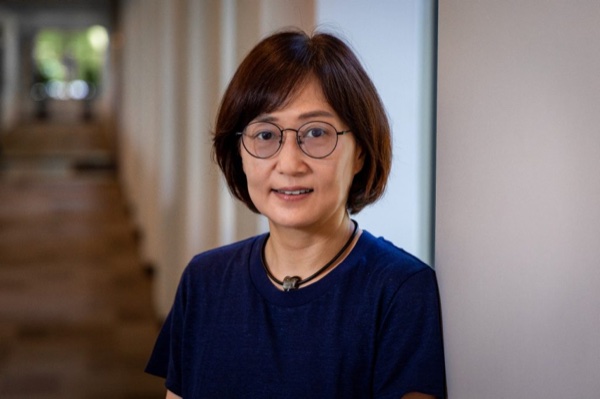
Keynote
Jin-Hee Cho

Jin-Hee Cho

Virginia Tech · Computer Science

Jin-Hee Cho is an Associate Professor of Computer Science at Virginia Tech, where she directs the Trustworthy Cyberspace Lab. Her research spans trust management, information credibility, social network analysis, decision making under uncertainty, and cyber defense, including defensive deception. Before joining Virginia Tech in 2018, she was a computer scientist at the U.S. Army Research Laboratory.

Panel 1
Brett Frischmann

Brett Frischmann

Villanova University · Law, Business & Economics

Brett Frischmann is the Charles Widger Endowed University Professor in Law, Business and Economics at Villanova University. His research spans intellectual property, privacy, and technology law. With philosopher Evan Selinger, he co-authored Re-Engineering Humanity (Cambridge University Press, 2018). His recent work advocates friction-in-design to safeguard human capabilities and values. Also a workshop organizer.
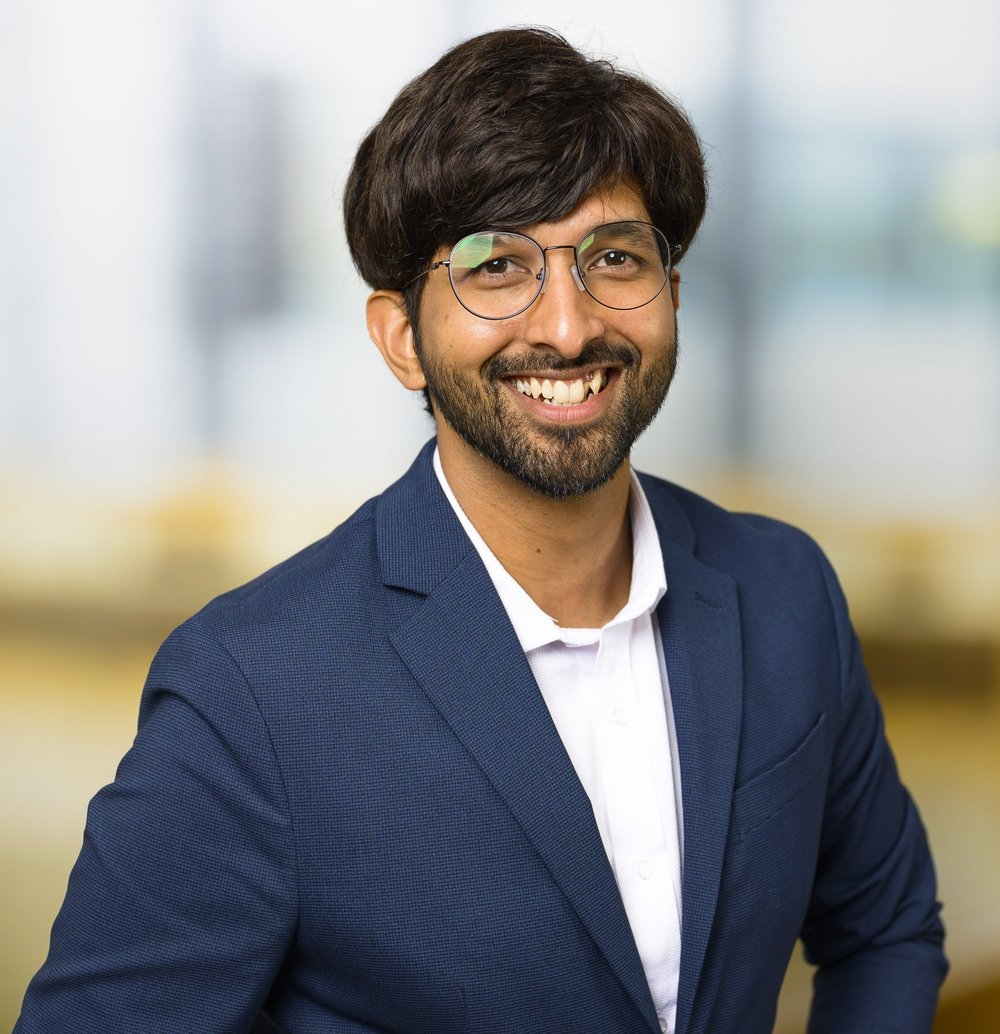
Panel 1
Ujwal Gadiraju

Ujwal Gadiraju

Delft University of Technology · Web Information Systems

Ujwal Gadiraju is an Associate Professor in the Web Information Systems group at Delft University of Technology, where he directs the Delft AI Design@Scale Lab. His research spans human-computer interaction, AI, crowd computing, and information retrieval, with a focus on human-centered AI and appropriate human reliance on AI systems. He serves on the HCOMP steering committee.
Panel 2
Nicholas Caputo

Nicholas Caputo

Johns Hopkins School of Government and Policy

Nicholas Caputo is Assistant Professor of Frontier AI Governance at the Johns Hopkins School of Government and Policy and Law & AI Lead at the Oxford Martin AI Governance Initiative. He studies how law can govern artificial intelligence and how AI can improve legal and administrative institutions, drawing on constitutional and administrative law and technical work in AI alignment.

Panel 2 · Remote
Ryan L. Boyd

Ryan L. Boyd

Vanderbilt University · College of Connected Computing

Ryan L. Boyd is an Assistant Professor in the College of Connected Computing at Vanderbilt University. A psychologist and computational social scientist, he studies mental health, personality, values, and social relationships through the computational analysis of language. He also examines large language models as objects of psychological study and has worked on the LIWC text analysis software since about 2014.

Panel 2 · Remote
Pat Pataranutaporn

Pat Pataranutaporn

MIT Media Lab · Cyborg Psychology

Pat Pataranutaporn is an Assistant Professor of Media Arts and Sciences at the MIT Media Lab, where he directs the Cyborg Psychology group and co-directs the Advancing Humans with AI program. His group studies how AI reshapes cognition, emotion, and behavior, including emotional dependence on AI companions, cognitive manipulation, and false memory implantation. His Future You project, an AI digital twin for long-term thinking, has been used in more than 100 countries.


Call for Participation

Contribute to CogSec 2026

The call is now closed. CogSec brings together work on how AI-mediated systems shape — and can protect — human attention, belief formation, memory, judgment, agency, and collective sensemaking.

What the call covered

Short papers, position papers, demos, and datasets (non-archival) on measuring over- and under-reliance; the cognitive vulnerabilities above; persuasion and manipulation; misinformation, prebunking, and deliberation; crowdsourced verification and provenance; deepfake detection; frictional and cognitive-forcing design; and the auditing and governance of cognitive risks.

Submission format

2–6 pages (excluding references) in the ACM Primary Article Template (LaTeX and Word versions available; an Overleaf template is also provided), or an extended abstract plus demo description. The call closed on August 17, 2026. At least one author of each accepted paper must register and present. Accepted work appears as a lightning talk and/or poster, and all participants join the hands-on session that builds the community CVMC. Review is single-blind — submissions need not be anonymized — with each receiving at least two reviews and organizers recusing from any conflicts; selection is lightweight (relevance, clarity, discussion potential).

Key dates

Aug 17, 2026
Submissions closed
Aug 20, 2026
Notifications sent
Aug 21 Aug 28, 2026
Early registration ends Extended
Sep 27, 2026
Workshop

Submissions are closed

The call closed on August 17, 2026 (AoE). Thank you to everyone who sent work. Decisions went out to all authors on August 20. All 17 accepted talks are in the program, with abstracts on the papers page. Authors can review their submission on EasyChair.

You do not need an accepted paper to take part. CogSec is open to anyone who registers, and the CVMC Jam is built so that every person in the room helps produce the catalog. Questions? Reach the organizers by email.

Register to attend → Email the organizers →

Registration

CogSec runs on the HCOMP / CI 2026 workshop day, Sunday September 27, and you can register for the workshop day on its own without registering for the main conference. Workshop-day registration includes snacks and a boxed lunch; full-conference registration (Sep 27–30) covers the workshop day too.

Workshop dayEarly
through Aug 28
Regular
by Sep 4
Late
after Sep 4
Student$90$100$110
ACM member$125$150$175
Non-member$175$200$225

You do not need to submit a paper to attend; everyone is welcome. Late rates now apply. The workshop is hybrid, so remote attendance is an option.

Register → Rates & details →
Organizers

Organizing committee

Organized with institutional backing from the Stanford HAI Cognitive Security Task Force.

Utsav Gupta

Utsav Gupta

Stanford HAI Cognitive Security Task Force · Stanford University · Lead organizer

Co-leads the Task Force and its speaker series; lead author of the CVMC work accepted at the 3rd Frictional AI Workshop (HHAI 2026) and the 2026 Trust and Safety Research Conference.

Brett Frischmann

Brett Frischmann

Villanova University

Widger Chair in Law, Business & Economics; co-author of Re-Engineering Humanity. Brings extensive convening experience from the Workshop on Governing Knowledge Commons.

Eric Heng

Eric Heng

Stanford University · Cognitive Security Task Force

Co-Lead of the Cognitive Security Task Force and co-author of the 2026 position paper AI Development Should Prioritize Cognitive Security.

Andreas Haupt

Andreas Haupt

Stanford HAI · Stanford Digital Economy Lab

HAI Postdoctoral Fellow (Ph.D., MIT CSAIL) researching human–AI evaluation, oversight, and platform incentives; previously with the U.S. FTC and the European Commission.

Harram Mansoor

Harram Mansoor

Inter-American Development Bank · IFI AI Working Group

Tech Lead of AI at the IDB and chair of the IFI AI Working Group, coordinating AI governance across international financial institutions and multilaterals; previously worked with DHS and Google on the interaction between AI systems and neurodivergent cognition. Her research examines how autonomous AI shifts the public-sector attack surface from access to belief.

Rebecca Neff

Rebecca Neff

University of Pennsylvania · Cognitive Security Task Force

Studies computer science at the University of Pennsylvania and serves on the Georgetown University Board of Regents, bringing an institutional-governance perspective alongside her technical work. A member of the Cognitive Security Task Force.